
Autumn Walks: How to Plan a Leaf-Peeping Day Trip
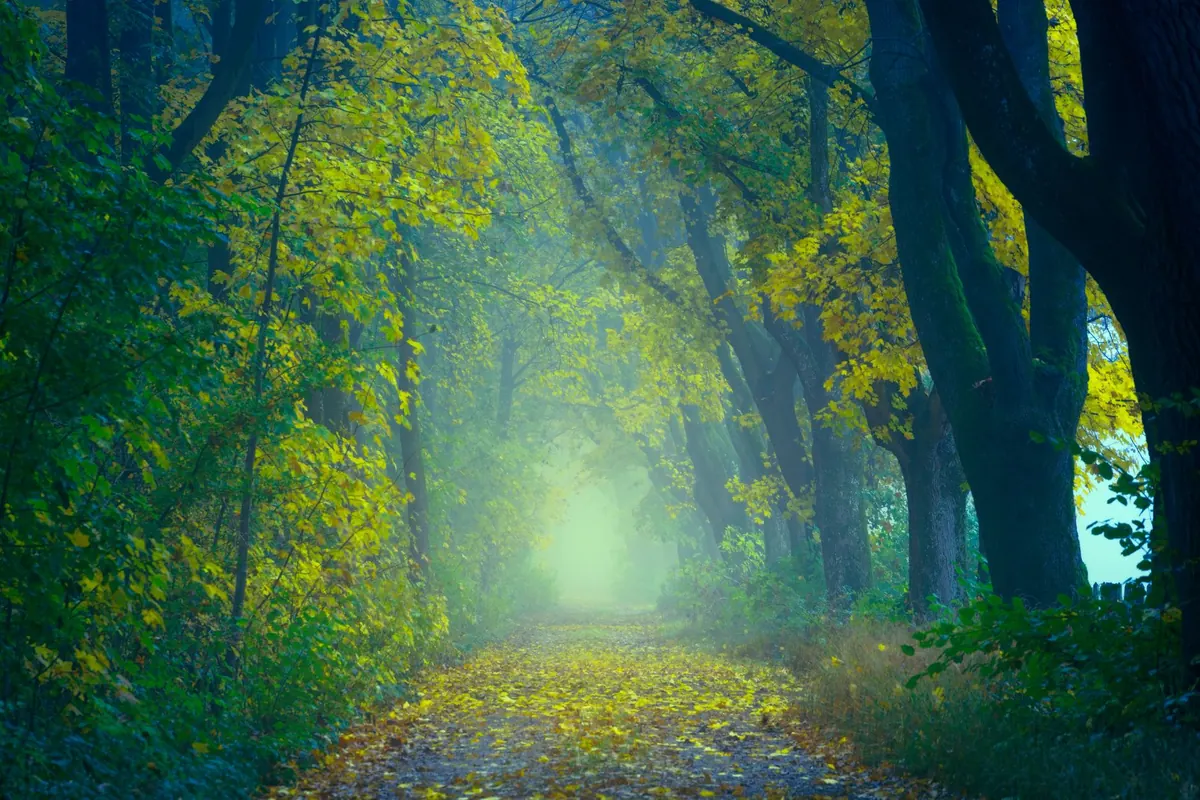
There's a particular October morning that feels like a small holiday: cold air, low sun through the trees, a path so thick with leaves you can't hear your own footsteps. You can't book that morning. You can improve your odds of getting it. A little planning — timing, route choice, a flask — turns a vaguely nice autumn stroll into a day everyone remembers.
Time It Right, and Don't Chase "Peak"
Autumn colour is a moving target. It depends on shortening days, cool nights and each tree's own clock, which is why one wood can be spectacular this week and bare the next. It also travels: colour arrives first on high ground, then creeps downhill and south over the following days. Climb a hill and find the summit past its best, and the sheltered valley below may be a week behind.
Species matter too. Maples and birches tend to turn early and brightly, beeches go bronze, and oaks are stubborn, holding dull leaves well into November. A mixed wood gives you a longer window than a plantation of a single tree.
Signs you're close
- A tree or two turning in an exposed, sunny spot: you're about a week early.
- Half the canopy in colour, half still green: go now, and go again in a few days.
- A hard wind and a wet night: the best of it is on the ground.
Cool, bright weather generally brings out stronger colour, and an early hard freeze can dull it. But the weeks either side of peak are quieter, easier to park in, and just as good to walk in.
Choose a Route Worth the Drive
The commonest mistake on a leaf-peeping trip is a long drive for a short walk. If you're travelling an hour or more, aim for at least two hours on foot, or pair two shorter walks with lunch in between.
Look for water, a ridge or a viewpoint, and a mix of trees — a river or lake doubles the colour and gives you something to photograph when the canopy thins. Prefer broad, well-drained paths. Fallen leaves hide roots and rocks, and a route that's lovely in July can be slippery and ankle-turning in late October. A loop beats an out-and-back: the ground keeps changing, and "are we nearly there?" has a better answer.
Check recent trail photos if you can, and arrive early. On the first bright weekend after the turn, popular car parks fill by mid-morning. Early also means better light for photography, quieter paths, and the chance to see mist sitting in the valleys before the sun burns it off. If you can only go at midday, aim for a route with water or a viewpoint — reflections and long views carry the day when the light is flat.
If you're walking with children, a shorter loop with a destination — a bridge, a waterfall, a cafe — works better than a grand circuit. And if you have a dog, check for livestock and keep it on a lead around sheep and cattle, especially in autumn when cows can be protective.
Pack for the Season, Not the Forecast
Autumn weather can turn in an hour. The difference between a glorious walk and a miserable one is often a dry pair of socks and a flask. The forecast may say "sunny," but valleys hold mist, ridges catch wind, and a shower can arrive from nowhere.
- Layers: a base layer, a warm mid-layer, and a waterproof shell. You'll shed and add them all day.
- Footwear: boots with deep tread, not smooth trainers. Wet leaves are slicker than mud.
- Flask: tea, coffee or soup. A hot drink at a viewpoint is half the memory.
- Snacks: something easy — flapjack, fruit, nuts. Blood sugar drops on cold walks.
- Navigation: a paper map or a charged phone with an offline map. Signal is patchy in woods.
- Extras: a small towel for muddy paws or wet seats, a bin bag for boots, and a headtorch if you might be out late.
If you're driving, keep a spare pair of shoes and a blanket in the car. You'll thank yourself on the way home.
Make a Day of It
A leaf-peeping trip doesn't have to be just a walk. The best days have a shape: a slow start, a walk, a long lunch, a second short stroll or a scenic drive home. That rhythm gives everyone something to look forward to and takes the pressure off the walk itself.
Start in a market town and pick up a picnic — bread, cheese, apples, something from a bakery. Then drive to the trailhead. After the walk, find a pub with a fire and a window. If you have energy left, visit a garden or arboretum with labelled trees; places like Westonbirt in Gloucestershire or Sheffield Park in Sussex are designed for autumn colour and have easy paths. Finish with a viewpoint for sunset, or a scenic route home that avoids the motorway.
A sample autumn day
- 9:00 a.m. Arrive at the car park. Boots on, flask filled, map out.
- 9:30–12:30 Walk a loop with a ridge or river. Stop at the best viewpoint for a hot drink.
- 1:00 p.m. Lunch at a pub or a picnic bench. Let everyone dry off and warm up.
- 2:30 p.m. Short second walk — a lake circuit or a garden — or a scenic drive.
- 4:00 p.m. Head home before the light goes. You'll miss the worst of the traffic and the dark lanes.
If that feels like too much, cut the second walk. One good walk and a good lunch is a perfect day.
Safety and Comfort on Leafy Trails
Leaves are beautiful but they hide hazards. Wet leaves on a slope are as slippery as ice. Roots and rocks disappear under drifts. A path that's obvious in summer can be hard to follow when the ground is a uniform orange.
- Watch your footing on descents. Take short steps, and use trekking poles if your knees complain.
- Check sunset time. Autumn days shorten fast. Aim to be back at the car with an hour of light to spare.
- Tell someone your route and expected return time. Phone signal may vanish.
- Be aware of hunting seasons. In some areas, autumn is game season. Wear bright colours and stick to marked trails if you're unsure.
- Keep dogs under control around livestock, wildlife and other walkers. Not everyone loves a wet dog shaking off leaves.
- Leave no trace. Take litter home, don't pick flowers or disturb fungi, and don't build fires.
I only went out for a walk and finally concluded to stay out till sundown, for going out, I found, was really going in. — John Muir
That quote captures the point of a good autumn walk. It's not about ticking off a viewpoint. It's about being outside when the season is changing, and letting the pace slow down.
If You Miss the Peak
Even when the maples are bare, autumn has a second act. Larch turns gold in November. Beech hedges hold bronze leaves through winter. The low sun lights up seed heads, grasses and spiders' webs. A walk in late autumn can be just as good — quieter, muddier, with long views through leafless trees that you'd never get in summer.
So don't worry if you're a week late. Go anyway. The leaf-peeping day trip is really just an excuse to spend a day outside in the best season of the year. Plan enough to make it easy, then let the day unfold. That's how you get the morning you can't book.
Photo: Johannes Plenio / Pexels
Related posts
More stories you’ll love reading